Pharmacology Exam 1 Questions and Answers: What Nursing Students Need to Know to Succeed
Pharmacology Exam 1 is often the first exam that makes nursing students pause and realize that studying the way they did in prerequisite courses may no longer be enough. Unlike exams that rely heavily on memorization, pharmacology requires students to understand how medications work in the body, how they affect different patient populations, and how nurses use clinical judgment to administer medications safely. For many students, this shift can feel overwhelming, especially when exam questions are written in complex, scenario-based formats that test more than just recall.
Pharmacology Exam 1 also sets the tone for the rest of the course. The concepts introduced early on form the foundation for every medication that follows, which means struggling here can make later units even more difficult. The good news is that success on this exam is achievable with the right approach.
Understanding what the exam covers, recognizing how questions are written, and practicing with high-quality pharmacology exam questions and answers can dramatically improve confidence and performance.
Understanding the Structure of Pharmacology Exam
Most Pharmacology Exam 1 tests consist of approximately 50 questions drawn from three major content units, with each unit contributing a different number of questions. This uneven distribution is important because it helps students prioritize their study time more effectively. Instead of trying to master every topic at the same depth, students who understand the exam structure can focus on the areas that are most heavily tested.
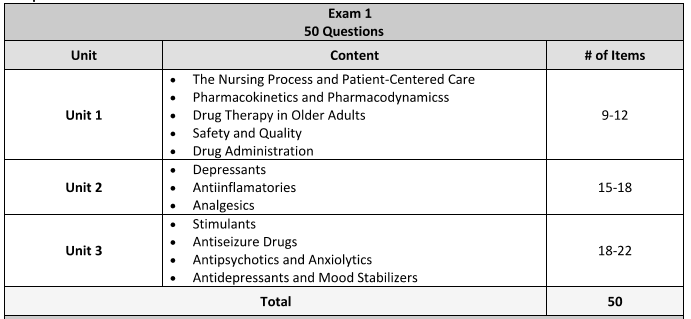
In addition to content distribution, students should recognize that pharmacology exam questions are rarely straightforward. Many questions are scenario-based and require students to identify the safest or most appropriate nursing action rather than simply recalling a fact.
This approach reflects real-world nursing practice and mirrors the style used on licensure exams. Knowing this early allows students to shift their study habits toward application and critical thinking rather than memorization alone.
Unit 1: Foundations of Pharmacology and Safe Medication Administration
Unit 1 focuses on the foundational principles that apply to every medication a nurse administers, making it one of the most important sections of Pharmacology Exam 1. This unit introduces the nursing process and patient-centered care as they relate to medication administration, reinforcing the idea that medication decisions should always be guided by assessment, safety, and individualized patient needs.
Students are also introduced to pharmacokinetics and pharmacodynamics, concepts that explain how medications move through the body and how they produce their effects. Rather than memorizing definitions, students are expected to understand how these processes influence dosing, timing, and monitoring. Exam questions often test how changes in absorption, metabolism, or excretion affect patient outcomes, especially in vulnerable populations such as older adults.
Drug therapy in older adults is another key focus in this unit, with questions emphasizing altered metabolism, increased sensitivity to medications, and the risk of adverse effects. Safety and quality principles, including proper drug administration and error prevention, are woven throughout Unit 1, reinforcing that many pharmacology questions are ultimately safety questions at their core.
Sample Unit 1 Pharmacology Exam 1 Questions and Answers
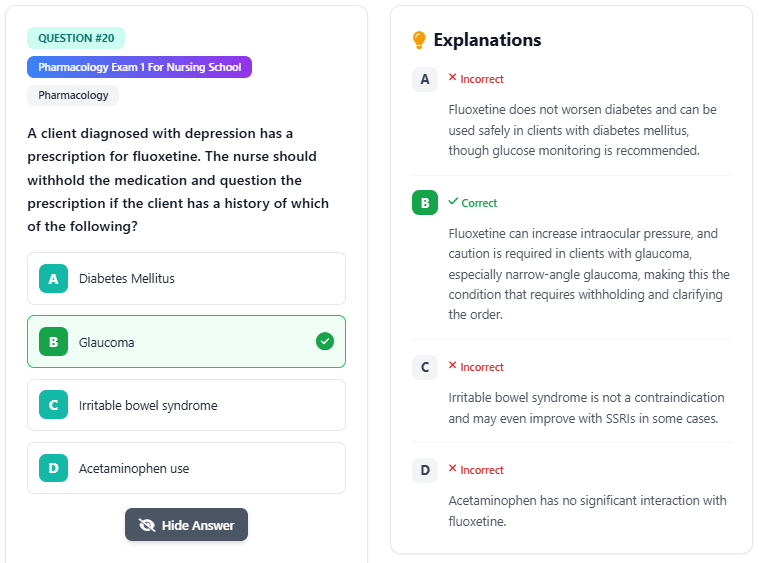
Practicing with questions that include detailed rationales allows students to understand why one answer is correct and why others are not, which is critical for building exam confidence. Rationales also help reinforce safe nursing practice by highlighting common distractors that may seem correct but compromise patient safety. This type of guided practice mirrors the level of explanation students should expect when studying for pharmacology exams.
Unit 2: Depressants, Antiinflammatories, and Analgesics
Unit 2 introduces medication classes that students encounter frequently in both academic settings and clinical practice. Depressants, antiinflammatories, and analgesics are commonly prescribed medications, which means exam questions often focus on their effects, risks, and nursing responsibilities rather than simple identification.
Depressant medications are typically tested in relation to central nervous system effects and patient safety, including sedation, respiratory depression, and fall risk. Antiinflammatory medications often require students to recognize:
- gastrointestinal,
- renal,
- bleeding risks,
- appropriate patient teaching.

Analgesics, particularly opioids, are frequently assessed through questions related to pain management, respiratory monitoring, and recognizing early signs of adverse reactions.
Rather than memorizing lists of drugs, students are expected to understand how these medications affect the body and what nurses must monitor to ensure safe administration. Unit 2 questions often reward students who can connect medication effects to patient assessment findings.
Sample Unit 2 Pharmacology Exam 1 Questions and Answers
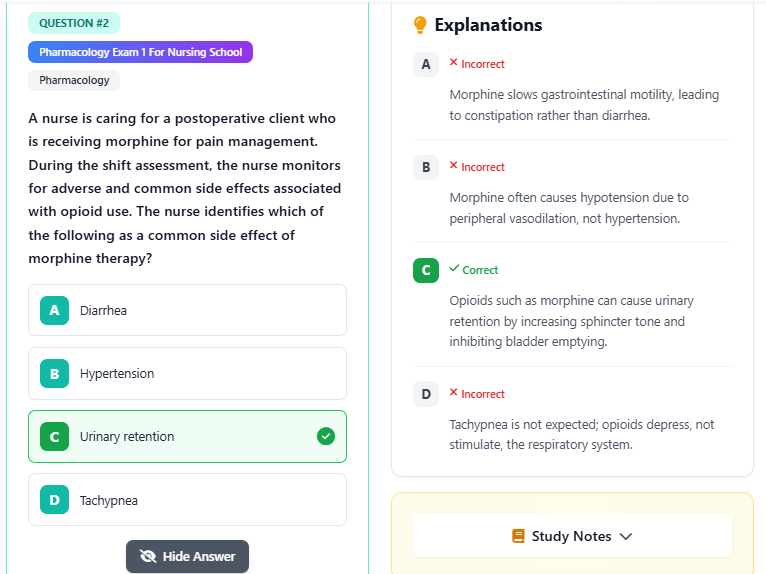
Consistent practice with Unit 2 questions helps students become more comfortable identifying medication-related risks and strengthens their ability to think critically under exam conditions. Over time, this approach builds confidence and reduces anxiety during pharmacology exams.
Unit 3: Psychotropic and Neurologic Medications

Unit 3 is often the most heavily tested section of Pharmacology Exam 1 and is commonly perceived as the most challenging. This unit includes stimulants, antiseizure medications, antipsychotics, anxiolytics, antidepressants, and mood stabilizers, all of which require careful monitoring and patient education.
Exam questions in this unit frequently emphasize therapeutic effects, serious adverse reactions, and black box warnings. Students are expected to recognize early signs of toxicity, understand when medications should be withheld, and identify appropriate nursing interventions. Questions may also focus on patient teaching, including what symptoms should be reported immediately.
Because psychotropic and neurologic medications carry significant safety risks, questions in this unit often require students to prioritize assessment and intervention. Success in Unit 3 depends on understanding medication effects in context rather than memorizing classifications.
Sample Unit 3 Pharmacology Exam 1 Questions and Answers
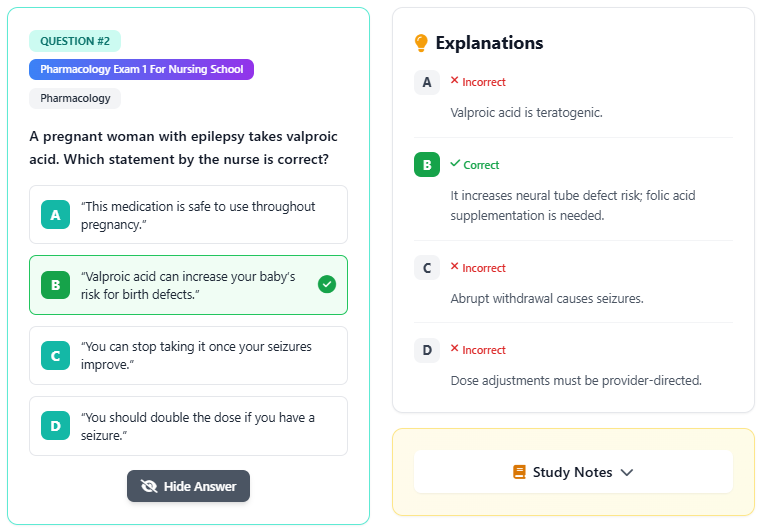
Reviewing rationales for these questions is especially valuable, as it helps students understand how exam writers expect them to prioritize safety and clinical judgment. Repeated exposure to psychotropic medication scenarios builds familiarity and confidence, making this challenging unit more manageable.
How to Study for Pharmacology Exam 1 Using Practice Questions
An effective study strategy for Pharmacology Exam 1 begins with a brief review of core concepts, followed by consistent practice with exam-style questions. Rather than studying for long periods without direction, students benefit from working through focused sets of questions and carefully reviewing rationales.
Reading explanations even when answers are correct reinforces sound clinical reasoning and helps prevent careless mistakes. Over time, repeated exposure to question patterns improves time management and reduces test anxiety, allowing students to approach the exam with greater confidence.
Common Pharmacology Exam 1 Mistakes Students Make
Many students struggle on Pharmacology Exam 1 because they rely too heavily on memorization, overlook key patient details, or rush through questions without identifying priority cues. Others fail to recognize important words such as first, best, or most appropriate, which often determine the correct answer.
These mistakes are common but can be corrected through targeted practice and thoughtful review. Understanding why an answer is wrong is just as important as knowing why another is correct, and this insight comes from practicing with well-designed pharmacology exam questions.
How Ncleks Pharmacology Question Bank Can Improve Exam Scores
Using a structured pharmacology question bank allows students to practice content aligned with their exams while receiving clear, student-friendly explanations. Organized question sets help students identify weak areas, track progress, and build confidence over time.
Compared to passive study methods, active practice with questions encourages deeper learning and improves long-term retention. For busy nursing students, having access to targeted practice questions can make studying more efficient and less stressful.
Building a Strong Pharmacology Foundation Starts With Exam 1
Pharmacology Exam 1 may feel intimidating, but it represents an opportunity to develop strong study habits and clinical reasoning skills that will carry forward throughout nursing school. By understanding the exam structure, focusing on foundational concepts, and practicing with high-quality pharmacology exam questions and answers, students can transform pharmacology from a source of anxiety into a manageable and rewarding subject.
Making exam-style practice part of a regular study routine helps students build confidence, improve performance, and prepare not only for course exams but also for future clinical practice and licensure success.


No comments yet. Be the first to comment!