The Ultimate Nursing Lab Values Cheat Sheet: Ranges and Mnemonic Tricks
Why Nursing Lab Values Matter on the NCLEX and in Clinicals
One topic follows you from your first fundamentals exam all the way to licensure: nursing lab values. Instructors test them, preceptors quiz you on them during clinical rotations, and the NCLEX expects you to recognize abnormal results quickly and act on them safely. You do not need to memorize every number in a reference manual. You need a focused set of high-yield ranges, a few memory hooks, and a clear sense of which abnormal values are dangerous. This lab values cheat sheet is built to give you exactly that.
NCLEX lab values questions rarely ask you to recite a range. Instead, they give you a client scenario, a medication, and a lab result, then ask what you should do first. The number is only half of the question. The other half is clinical judgment. For a full breakdown of that reasoning process, our guide on how to answer NCLEX lab value questions walks through the approach step by step.
In real practice, you will pull these results from the electronic health record. You will often compare today's value with yesterday's rather than looking at a single number in isolation. Learning how to read and apply clinical data will make those trends easier to spot.
One important note before you start: reference ranges vary slightly between laboratories, textbooks, and testing companies. The ranges below reflect values commonly used in NCLEX review. Always defer to your school's reference sheet for course exams. On the licensure exam, focus on recognizing values that are clearly high, clearly low, or critical, because that recognition is what drives the correct answer.

Electrolyte Ranges Every Nursing Student Must Know
Electrolytes are the backbone of any lab values cheat sheet because small changes can cause big problems, especially for the heart and the brain.
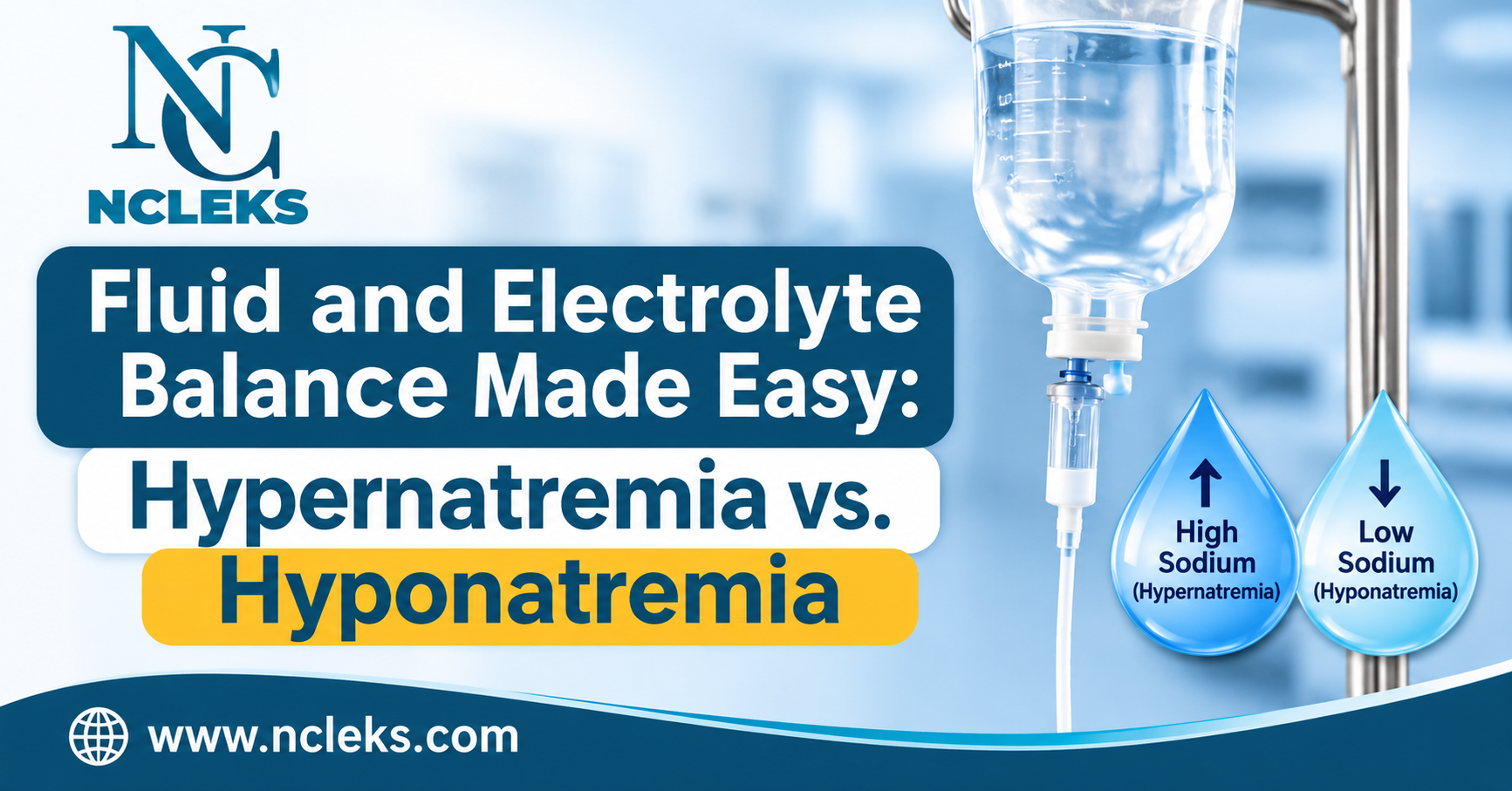
Sodium runs from 135 to 145 mEq/L. A simple trick is to say "one-thirty-five to one-forty-five; sodium keeps the brain alive. "That phrase reminds you that sodium imbalances show up as neurological changes such as confusion, headache, and seizures. Low sodium often follows fluid overload or SIADH. High sodium points to dehydration or diabetes insipidus. Our review of hyponatremia vs hypernatremia covers the full symptom picture.
Potassium is the electrolyte you can never ignore. The normal range is 3.5 to 5.0 mEq/L, and the mnemonic "3.5 to 5, keep the heart alive" ties the number to the risk. Both low and high potassium cause dysrhythmias, so any significant abnormality calls for cardiac monitoring. Remember that potassium is never given IV push, and that loop diuretics such as furosemide drive it down. For a side-by-side comparison of ECG changes and treatments, see hypokalemia vs hyperkalemia.
Calcium normally falls between 9.0 and 10.5 mg/dL. Low calcium makes nerves irritable, producing tingling, muscle cramps, and positive Chvostek's and Trousseau's signs. High calcium sedates the system, causing weakness, constipation, and kidney stones.
Magnesium ranges from about 1.3 to 2.1 mEq/L and behaves much like calcium. Low magnesium increases neuromuscular excitability and often travels with low potassium. Phosphorus, at roughly 3.0 to 4.5 mg/dL, has an inverse relationship with calcium. That is why clients with chronic kidney disease frequently have high phosphorus and low calcium. Chloride, at 98 to 106 mEq/L, generally rises and falls with sodium.

Hematology and Coagulation: CBC, PT/INR, and aPTT
The complete blood count tells you about oxygen-carrying capacity, infection, and bleeding risk. Hemoglobin is about 14 to 18 g/dL for men and 12 to 16 g/dL for women. Hematocrit is roughly 42 to 52 percent for men and 37 to 47 percent for women. A handy shortcut is that hematocrit is usually about three times the hemoglobin, so if one value looks off, check the other. An elevated hematocrit often signals dehydration from hemoconcentration, which is a frequent trap in NCLEX lab values questions.
White blood cells range from 5,000 to 10,000/mm³; think "five to ten, ready to fight again." A low count means the client may need neutropenic precautions, while a high count suggests infection or inflammation. Platelets normally run from 150,000 to 400,000/mm³.. When platelets drop below about 50,000, bleeding risk rises sharply. Below 20,000, spontaneous bleeding becomes a real concern, so avoid injections, rectal temperatures, and straight razors.
Coagulation studies are where nursing lab values and pharmacology overlap. A normal PT is about 11 to 12.5 seconds, and a normal INR is about 0.8 to 1.1. A client taking warfarin, however, has a therapeutic INR of 2 to 3, often 2.5 to 3.5 for mechanical heart valves. To pair each drug with its test, remember "War Plane, Heparin Pilot Training." Warfarin goes with PT and INR, and heparin goes with aPTT.
A normal aPTT is about 30 to 40 seconds. During heparin therapy, the target is 1.5 to 2.5 times the control value. The antidote for warfarin is vitamin K, and the antidote for heparin is protamine sulfate. An INR well above the therapeutic range is one of the classic reasons to pause a drug, which our article on when to hold a medication on NCLEX questions explains in detail.
Arterial Blood Gases and the ROME Mnemonic
Arterial blood gases intimidate many students, but they become manageable once you know four numbers and one mnemonic. The normal ranges are
pH: 7.35 to 7.45
PaCO₂: 35 to 45 mmHg
HCO₃: 22 to 26 mEq/L
PaO₂: 80 to 100 mmHg
Notice that pH and PaCO₂ share the same "35 to 45" pattern, just with a decimal shift for pH. That makes this section of your lab values cheat sheet easier to remember than it first appears.
The ROME mnemonic stands for Respiratory Opposite, Metabolic Equal. In respiratory problems, pH and PaCO₂ move in opposite directions. A low pH with a high PaCO₂ means respiratory acidosis. In metabolic problems, pH and HCO₃ move in the same direction. A low pH with a low bicarbonate means metabolic acidosis.
Use a three-step approach. First, label the pH as acidic, normal, or alkalotic. Second, see whether the PaCO₂ or the HCO3 matches that direction; the one that matches is the cause. Third, check whether the other value has started moving to correct the pH, which tells you whether compensation is happening. If the pH is back within range, compensation is full. If the pH is still abnormal, compensation is partial.
Link the gas to the clinical picture. Respiratory acidosis fits COPD, opioid overdose, or hypoventilation. Respiratory alkalosis fits anxiety-related hyperventilation. Metabolic acidosis fits diabetic ketoacidosis or diarrhea, and metabolic alkalosis fits prolonged vomiting or nasogastric suction. A client with a rapidly falling pH and rising PaCO₂ is deteriorating. Our guide to stable vs. unstable patients shows how to rank that client in a priority question.
Renal Function, Glucose, and Therapeutic Drug Levels
Kidney function shows up constantly in NCLEX lab values items because so many drugs are cleared by the kidneys. Blood urea nitrogen (BUN) normally runs 10 to 20 mg/dL, and creatinine is about 0.6 to 1.2 mg/dL. Creatinine is the more specific marker of kidney function. A rising creatinine should make you think about dose adjustments, nephrotoxic drugs, and contrast dye precautions. An elevated BUN with a normal creatinine often reflects dehydration, a high-protein diet, or gastrointestinal bleeding rather than true kidney failure.
Fasting blood glucose is normally 70 to 100 mg/dL. Anything below 70 is hypoglycemia and requires prompt action, usually 15 grams of fast-acting carbohydrate followed by a recheck in 15 minutes, known as the rule of 15. The specific steps are covered in our article on the priority nursing action for hypoglycemia. Hemoglobin A1c reflects average glucose over about three months. A value below 5.7 percent is normal, and many adults with diabetes aim for less than 7 percent.
Therapeutic drug levels round out the high-yield nursing lab values. Digoxin is commonly listed as 0.5 to 2.0 ng/mL, and toxicity risk climbs when potassium is low. Watch for nausea, vomiting, bradycardia, and yellow or green visual halos. Review the classic scenarios in digoxin NCLEX questions every nurse must know.
Lithium has a narrow therapeutic range of roughly 0.6 to 1.2 mEq/L. Dehydration and low sodium raise the level and increase toxicity risk. Early signs of toxicity include tremor, diarrhea, and vomiting.

Mnemonic Tricks and Study Strategies to Lock In Lab Values
Memorizing ranges once is easy. Keeping them through finals and licensure is the hard part. The most effective approach is to tie every number to a consequence rather than learning it as an isolated fact. When you think about potassium, think about the heart. When you think about sodium, think about the brain.
Calcium and magnesium work the same way. Low levels mean an excited, twitchy client, and high levels mean a sedated, sluggish client. Our hypocalcemia vs hypercalcemia review shows this pattern in practice questions.
Group your mnemonics by body system and say them out loud. "3.5 to 5, keep the heart alive." "Five to ten, ready to fight again." "Respiratory Opposite, Metabolic Equal." "War Plane, Heparin Pilot Training." Write your own version of this lab values cheat sheet on a single index card, then try to reproduce it from memory each morning for two weeks. Active recall like this beats rereading every time.
Spaced repetition also helps. Short daily reviews with flashcards will lock in nursing lab values far better than a single cram session. Our guide to smart NCLEX study methods for retention explains how to build that habit.
Finally, practice with application-level questions. Ask yourself three things every time you see a result: is it normal, is it dangerous, and what would I do first? That habit turns NCLEX lab values from a memorization chore into a clinical reasoning skill. The practice questions below are a good place to start.


No comments yet. Be the first to comment!