The Hardest Class in Nursing School: Why Students Struggle and How to Beat It
The hardest class in nursing school is often the defining challenge that determines whether students progress or fall behind. Many learners quickly realize that succeeding in nursing requires more than effort—it demands strategy and consistency. Understanding why nursing students struggle helps identify the root of academic difficulties. With the right nursing school study tips, students can learn how to pass nursing school classes and confidently overcome even the most demanding subjects. To know more about why students struggle with the hardest class in nursing school and how to overcome those challenges, read the article below, and you’ll be set.

What is the Hardest Class in Nursing School
First and foremost, pharmacology is widely considered to be the hardest class in nursing school. The difficulty of pharmacology as a nursing school course stems from its requirement to memorize content while applying it to situations that affect patient safety. Students must learn about more than 100 medications, which include their medical applications, potential side effects, contraindications, and drug interaction possibilities. Pharmacological therapies constitute a major part of the NCLEX exam, according to the National Council of State Boards of Nursing, which establishes their importance to nursing practice.
Pharmacology becomes particularly challenging because it requires complete precision in all aspects. Real clinical environments face critical dangers from even small errors in dosage and drug interactions. Students face pressure to achieve mastery in both theoretical knowledge and practical skills, which becomes essential for success in their nursing school studies.

Why Nursing Students Struggle in the Hardest Classes
The reason why nursing students struggle in the hardest classes often comes down to the intensity of the coursework and the need to quickly master complex concepts. Many students feel overwhelmed by the combination of heavy academic loads, clinical responsibilities, and high expectations. Recognizing these challenges is the first step toward improving performance and finding effective ways to succeed. The following are the reasons why nursing students struggle in the hardest classes:
1. Overwhelming Volume of Information
One of the biggest challenges for nursing students is the sheer scope of material they have to learn in such a short timeframe. Due to the real-life responsibilities they will face in the healthcare field, nursing students are expected to learn a vast amount of material in a relatively short timeframe. The World Health Organization states that for the patient to stay safe, the healthcare professional must have gone through a rigorous training program.
With this cognitive overload, many students will feel mentally exhausted, and unable to process the material needed. While the goal is to build an understanding of the material, students will frequently resort to this short-term strategy of cramming. Once the material is lost from short-term memory, it isn't typically regained due to the strategy used. Especially when the material is disorganized, the workload can quickly become overwhelming.

2. Complex Medical Terminology
Medical terminology is one of the many obstacles nursing students face. Students have to memorize numerous terms, many of which are complicated, and come from Latin and Greek roots. Research from the National Library of Medicine shows that difficulty with terminology significantly impacts comprehension across healthcare subjects.
The students who struggled to understand the terminology were unable to understand important concepts, which exacerbated the challenge during exams and clinical situations where accurate and precise communication is imperative. This challenge becomes especially pronounced in exams and clinical environments, where communicating with precision is vital.

3. Difficulty Connecting Theory to Clinical Practice
Most students have mastered the theoretical issues but found it difficult to practically implement them in real life. This disparity goes a long way in explaining why nursing students find it difficult when they are on clinical rotations. In theory, it can appear easy, but when it comes to actual patients, it can become complicated.
According to the American Association of Colleges of Nursing, clinical judgment can be ranked among the most challenging skills that nursing students can acquire. If knowledge is not applied in practice, it will remain abstract and is more difficult to remember during exams or in patient care situations.
4. Poor Time Management
Whether students succeed or fail largely depends on their ability to manage their time. The nursing students have a lot of coursework, clinical placement, and personal responsibilities, and have minimal time to rest.
Research shows that time management is among the leading reasons why students lag behind in their academics. In the absence of a systematic plan, students have a tendency to procrastinate and end up doing their studying in the last minute and feeling stressed. This trend has adverse impacts on performance and mental health.

How to Beat the Hardest Nursing Classes
By now, you are aware of the reasons why nursing students struggle in the hardest classes. With this knowledge at hand, time is ripe for you to know how to succeed in nursing school. The following are ways that can help you beat the hardest nursing classes as a student.
1. Use Smart Study Strategies
It is important to adopt proper study techniques to overcome the most difficult course in nursing school. Rereading notes is a passive learning method that cannot be used to master complex material.
The study by the American Psychological Association indicates that active recall and spaced repetition may enhance memory retention by 50 percent. These approaches support in-depth learning and long-term memory development.
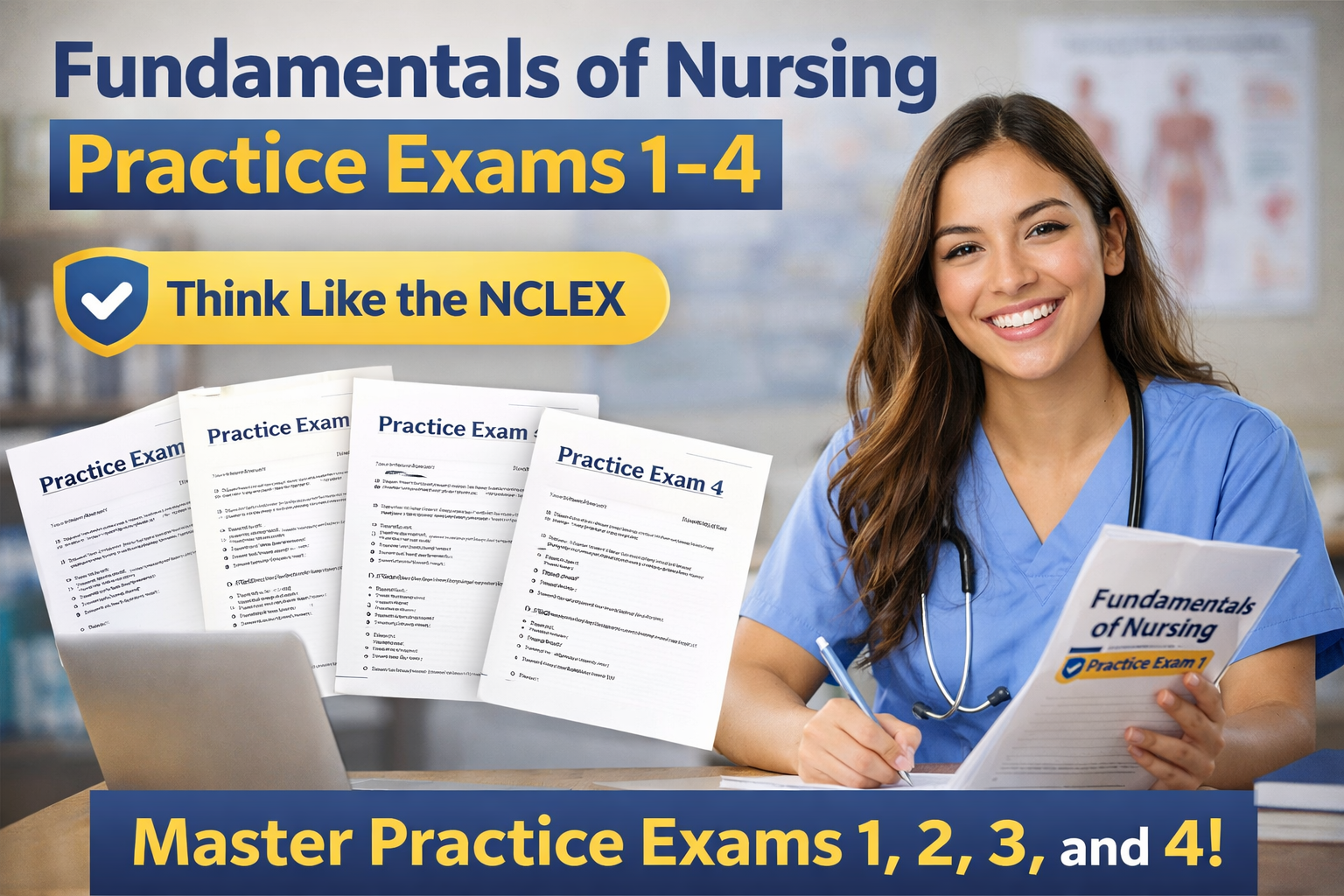
The use of NCLEX-style questions also allows students to practice the knowledge that is applicable in real-life situations, and therefore, they are better placed to remember the information when examinations are being tested. These are essential nursing school study tips for academic success.
2. Simplify and Master Medical Terminology
One of the most effective ways to eliminate academic stress is to simplify different terminologies. The ability to deconstruct words into prefixes, suffixes, and root meaning assists the students in learning unfamiliar words in a short period.
Memorizing with flashcards and mnemonics helps to strengthen the memory, whereas repetition is the key to long-term retention. Rather than studying and memorizing to pass exams, regular practice will enable them to gain confidence over time. Mastering terminology also enhances understanding of all the topics of nursing, as it is simpler to listen to lectures and answer questions on the exams.
3. Strengthen Clinical Thinking Skills
Nursing exams and practical nursing roles require the use of critical thinking skills. Students should move past rote memorization in order to assess and evaluate clinical scenarios. The NCSBN states that current examinations emphasize application questions more than simple recall.
Students also develop the necessary skills through case study and simulation practice. Ultimately, this method fosters confidence and develops the clinical and academic decision-making skills needed.

4. Build a Strong Support System and Routine
Having a good support system will go a long way in helping to beat the toughest course in nursing school. Study groups enable the students to exchange ideas, clear up doubts, and remain motivated. The Centers for Disease Control and Prevention state that students who have support networks have lower stress levels and improved academic performance.
Establishing a routine also allows students to keep order and cope with the work easily. Maintaining a balance between studying and rest guarantees success in the long term and avoids burnout. Also, you can hire nursing students who work as freelancers to handle assignments for you. This can also help you have ample time to deal with other issues while your nursing assignment gets worked on by a professional.

The hardest class in nursing school may feel overwhelming. Nevertheless, it is not impossible to overcome. By understanding why nursing students struggle, students can adopt effective strategies and improve their performance. Using effective nursing study tips, staying consistent, and building strong routines will help learners succeed. Ultimately, mastering these challenges is part of becoming a skilled nurse and learning how to pass nursing school classes with confidence. Consider all the ideas that have been discussed above, and the hardest class in nursing school will be a walkover.

No comments yet. Be the first to comment!